Presentation by Andreas Hepp for the 10th edition of the HumAIn Talks at the University of Oslo
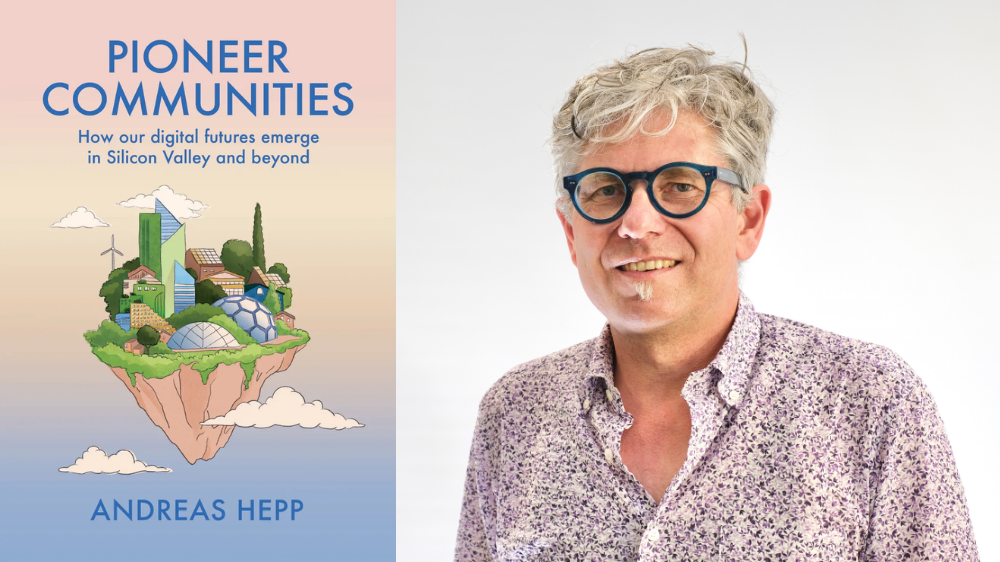
For the 10th HumAIn Talks at the University of Oslo, ZeMKI Speaker Prof. Dr. Andreas Hepp will give a talk on Silicon Valley, pioneer communities, and AI futures this coming Friday, October 23.
About the Talk
Where do Silicon Valley’s visions of the AI future come from? A superficial answer to this question is: from “Big Tech” and the “Tech Bros”. However, to grasp the cultural dynamics of AI-related futuring and the inequality and power it rearticulates, a more in-depth analysis is necessary. In his talk, Andreas Hepp shows that Big Tech’s “loud futuring” incorporates the visions of “quiet futuring” by technology-oriented groupings in and around Silicon Valley into broader societal imaginaries. Thus, many of the current visions of AI’s future stem from the Whole Earth Network, Effective Altruism, and other pioneer communities. Drawing on an ethnographic study comprising 321 interviews as well as analyses of the Silicon Valley Archives, Andreas Hepp traces these cultural dynamics and discusses their theoretical significance.
The presentation is divided into three parts. In the first, the dynamics of “quiet” and “loud futuring” are examined: Andreas Hepp shows to what extent the future visions of pioneer communities serve as a fundamental resource for Big Tech’s “loud futuring”—and how Big Tech, at the same time, provides the framework for the future discourse of pioneer communities. In the second part, AI-related visions of the future spanning three generations are reconstructed: from “cybernetic futures” (futures of self-organizing society) through “agile futures” (futures of digital agile capitalism) to contemporary “slippery futures,” in which techno-solutionism and existential threat converge. The third part offers a socio-theoretical reflection: the unprecedented concentration of capital accelerates the implementation of certain visions of the future, and the attribution of agency to AI transforms knowledge practices both in society.
For critical media and communication studies, this highlights the need to analyze the emergence of technology in relation to projections, visions, and imaginaries of the future—rather than waiting until the technologies in question have a broad societal impact.
For more information, visit University of Oslo’s HumAIn Talks Site.
19. October 2026

Contact:
Prof. Dr. Andreas Hepp
ZeMKI, Center for Media, Communication and Information Research
University of Bremen
Phone: +49 421 218-67620
Assistent Mrs. Schober: +49 421 218-67603
E-mail: andreas.hepp@uni-bremen.de