Book Presentation “Data Feminism” with Prof. Lauren F. Klein
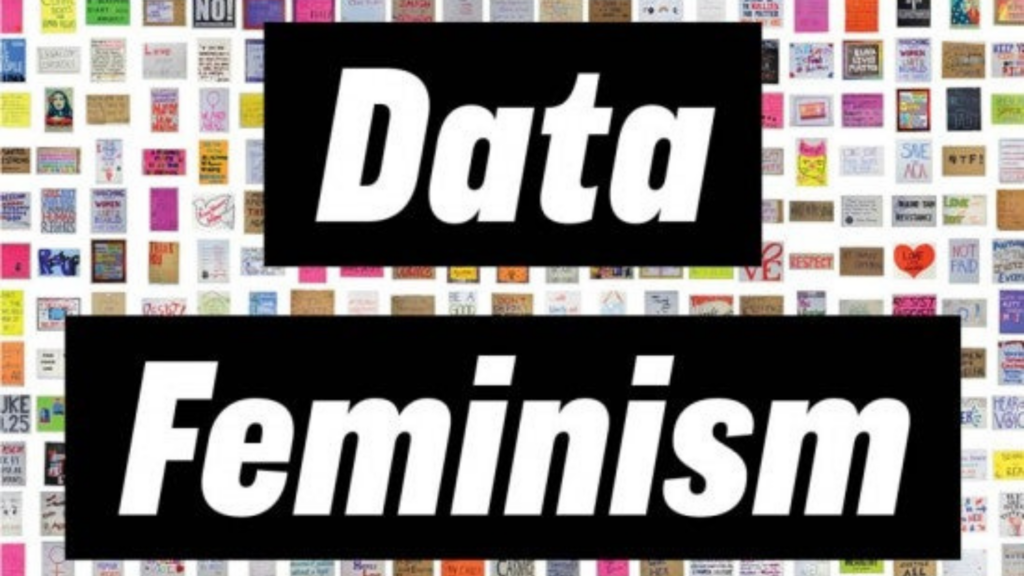
On Thursday, September 3, at 4:00 p.m., the Diversity & Gender Equality Working Group of the ComAI Research Group invites you to a book presentation of “Data Feminism” as part of its internal lecture series. Together with Prof. Lauren F. Klein (Emory University, USA), the book’s co-author, we would like to discuss the role of data in science and society, how it is generated and used, and the associated power structures and inequalities.
Published in 2020 and the recipient of multiple awards, this book has played a significant role in shaping discussions surrounding data science, AI, and data ethics. From an intersectional feminist perspective, authors Catherine D’Ignazio and Lauren F. Klein demonstrate which power structures are reflected in data practices and how data can entrench inequality, reinforce discrimination, or contribute to surveillance. In particular, they criticize the predominantly white, male, and techno-heroic narratives in the data sciences and ask: Who produces data? For whom is it collected? And whose perspectives and interests are taken into account, while whose remain invisible?
Together, we would like to discuss the impact this data has on our research, science, and everyday lives, and how data practices can be reimagined through intersectional and feminist approaches. After all, “Data Feminism” is, not least, a “call to action” (7 Principles of Data Feminism).
The book is available as open access.
Abstract
Today, data science is a form of power. It has been used to expose injustice, improve health outcomes, and topple governments. But it has also been used to discriminate, police, and surveil. This potential for good, on the one hand, and harm, on the other, makes it essential to ask: Data science by whom? Data science for whom? Data science with whose interests in mind? The narratives around big data and data science are overwhelmingly white, male, and techno-heroic. In Data Feminism, Catherine D’Ignazio and Lauren Klein present a new way of thinking about data science and data ethics—one that is informed by intersectional feminist thought.
Illustrating data feminism in action, D’Ignazio and Klein show how challenges to the male/female binary can help challenge other hierarchical (and empirically wrong) classification systems. They explain how, for example, an understanding of emotion can expand our ideas about effective data visualization, and how the concept of invisible labor can expose the significant human efforts required by our automated systems. And they show why the data never, ever “speak for themselves.”
Data Feminism offers strategies for data scientists seeking to learn how feminism can help them work toward justice, and for feminists who want to focus their efforts on the growing field of data science. But Data Feminism is about much more than gender. It is about power, about who has it and who doesn’t, and about how those differentials of power can be challenged and changed.
Bio
Lauren F. Klein is a professor of Data & Decision Sciences and English at Emory University in Atlanta, Georgia, in the United States. There, she directs the Digital Humanities Lab and the Atlanta Interdisciplinary AI Network. Her research focuses in particular on issues related to gender, race, and social justice, which she examines using computational and critical methods.
21. July 2026

Contact:
Prof. Dr. Andreas Hepp
ZeMKI, Center for Media, Communication and Information Research
University of Bremen
Phone: +49 421 218-67620
Assistent Mrs. Schober: +49 421 218-67603
E-mail: andreas.hepp@uni-bremen.de