Keynote on “Quiet and Loud Futuring” in Shanghai
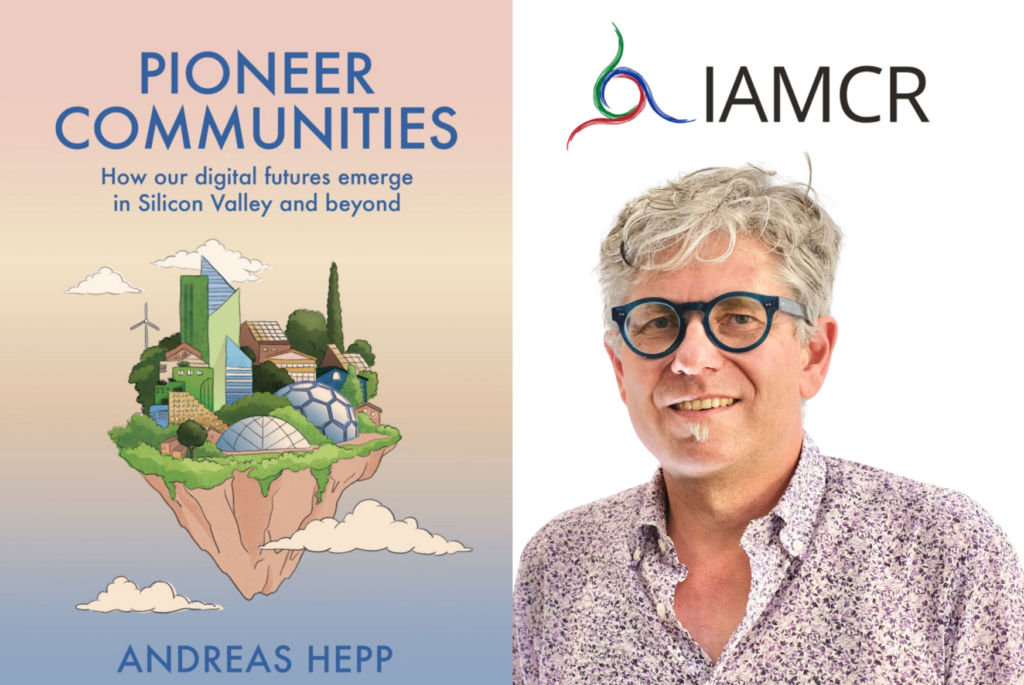
At the international conference “Creative Communication and Empowerment,” taking place on April 17. and 18. at Shanghai Jiao Tong University, ZeMKI Head Prof. Dr. Andreas Hepp will deliver a keynote address on the topic of “quiet and loud futuring,” which is also the subject of his book on pioneering communities in relation to media technology development.
The conference is co-organized by the IAMCR – the International Association for Media and Communication Research – and invites scholars, industry experts, and early-career researchers from around the world to exchange current research findings on the theoretical boundaries and practical pathways of creative communication. The academic conference aims to use “empowerment” as a central analytical perspective to deepen the understanding of the social functions and public value of new media, thereby contributing to building an inclusive and sustainable global society.
In his keynote address, Andreas Hepp explores key themes from his book “Pioneer Communities: How Our Digital Futures Emerge in Silicon Valley and Beyond”. In it, he examines so-called “pioneer communities” ranging from early networks like the Whole Earth Network and the Maker and Quantified Self movements to more recent players such as Ethereum and their influence on our visions of digital futures. He focuses on different forms of futuring: While “loud futuring” describes highly visible and public future narratives of Big Tech companies, “quiet futuring” refers to less visible but influential processes within pioneer communities. According to Hepp, these communities often develop more radical visions that are later taken up by companies and disseminated in a toned-down form.
The premise of Andreas Hepp’s keynote is the observation that perceptions of visions of the digital future have changed significantly in recent years. While Big Tech companies have long promoted an optimistic, almost utopian vision, this has now increasingly been overshadowed by critical perspectives. Terms like “techno-fascism” reflect growing concerns about limitations, control, and the societal impacts of platforms and artificial intelligence.
Hepp argues that, in the case of artificial intelligence, we have not only reached a point where “new” media technologies are emerging, but a completely new qualitative dimension has opened up for research. He therefore advocates addressing visions of the technological future not only once the relevant technologies have already begun to have far-reaching societal impacts, but rather viewing the emergence of technology fundamentally in the context of projections, visions, and conceptions of the future.
Further information about the event is available here.
12. April 2026

Contact:
Prof. Dr. Andreas Hepp
ZeMKI, Center for Media, Communication and Information Research
University of Bremen
Phone: +49 421 218-67620
Assistent Mrs. Schober: +49 421 218-67603
E-mail: andreas.hepp@uni-bremen.de